
Work Rights Press
Whether you're a new union steward, or simply want to bone up on your legal knowledge for an upcoming campaign, Robert Schwartz's The Legal Rights of Union Stewards is a welcome addition to your library.
This easy to navigate book is a primer on your rights as a steward and walks you through all the basics from the National Labor Relations Act to the grievance process to Weingarten rights.
Just cause is the keystone of the union contract, protecting members from unwarranted and excessive discipline. But up to now many of its most important secrets have been restricted to arbitrators and labor professionals.
In Just Cause: A Union Guide to Winning Discipline Cases, veteran labor lawyer Robert M. Schwartz—best-selling author of he Legal Rights of Union Stewards—offers a step-by-step guide filled with advice, practical tips, and winning techniques. Grievance representatives can use these methods to compose compelling arguments. Many unions use Just Cause every day to save workers’ jobs and build solidarity.
Topics covered include: Requesting information; Due process; Double jeopardy; Disparate treatment; Hearsay; Zero-tolerance rules; Last chance agreements; Off-duty misconduct; Negligence; Sexual harassment; Sleeping on the job; Dishonesty; and Presenting grievances.
Don't let your boss be the only one that's informed on your rights as a union member to organize a strike, picket, or action. Robert Schwartz's latest book, a revised third edition of No Contract, No Peace: A Legal Guide to Contract Campaigns, Strikes, and Lockouts, walks union members and leaders through their rights to speak out.
An easy-to-read resource and a powerful tool for any union mobilizing its ranks, this book will help you organize your next contract campaign, work grievance action, or picket.
This book explains the powerful labor relations principle of past practice. It assists union representatives in identifying past practice violations, investigating grievances, making presentations, evaluating whether to file for arbitration, and filing labor board charges.
It answers dozens of critical questions, including: What are the five requirements necessary to establish a past practice? Must a practice exist throughout the workplace? Must a past practice be jointly established? and Is a new owner required to respect a past practice?
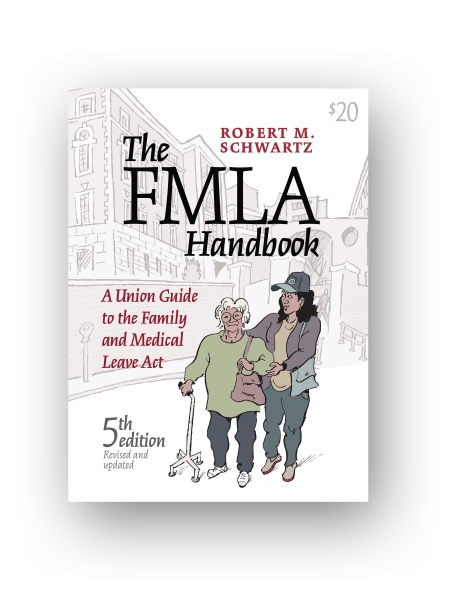
The FMLA Handbook, by union attorney Robert M. Schwartz, explains the rights of employees under the Family and Medical Leave Act of 1993 (FMLA), including:
- The right to be absent for up to sixty days each year if you are unable to work because of a serious health condition.
- The right to be absent to care for a family member such as a parent with a stroke, a husband who suffers a nervous breakdown, or a child who is too ill to go to school.
- The right to take twelve weeks leave for child birth, adoption, or in order to care for a child under one year of age.